

Climatic Patterns and Ecological Convergence in Exalphus
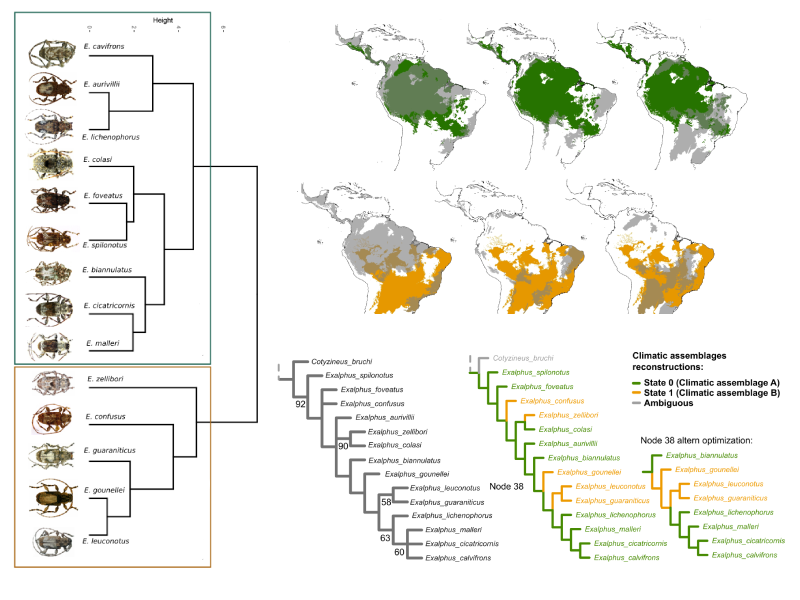
Understanding the factors that shape insect distributions is essential for interpreting biodiversity patterns and anticipating responses to environmental change. This study provides new insights into the climatic and evolutionary patterns underlying the distribution of the longhorned beetle genus Exalphus, a diverse Neotropical group with well-established taxonomy but limited information on its environmental associations. By integrating species distribution models, multivariate analyses, and phylogenetic reconstruction, we identify two major climatic assemblages associated with contrasting environments, including tropical rainforests, savannas, and seasonally dry forests. The results also indicate that shifts toward drier environments occurred repeatedly across unrelated lineages, suggesting ecological convergence rather than a shared phylogenetic origin. These findings demonstrate the value of combining ecological and evolutionary approaches to better understand the processes shaping insect distributions and contribute to broader knowledge of Neotropical insect diversity.
Read the full article, here